Why it helps
A pipeline is only useful if everyone agrees what each stage means, and nothing sits in it without a next step. Keep enquiries in their own list. Most never become real work, and they shouldn't clutter the pipeline. An enquiry becomes an opportunity when you decide it is worth a conversation.
The two sheets
Enquiries. One row for each person who asks about work: when, who, how they got in touch, what they asked, who owns it, when you first replied, and its status.
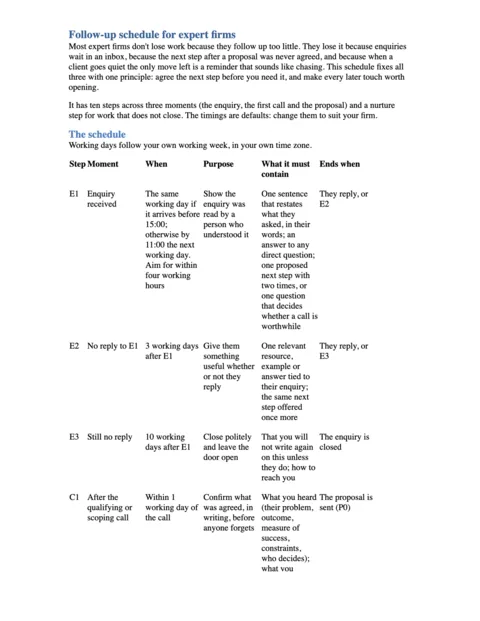
Opportunities. One row for each piece of work you are going after: its owner, stage, next step and date, value, and outcome. A column flags any next step that is overdue or missing.
Stage, status, outcome and the reason for a loss each have a drop-down list, so everyone uses the same words.
The five stages
| Stage | It means | Move on when |
|---|---|---|
| Qualify | Worth a conversation. You are finding out if there is real work | You have held the first call and decided to go after it |
| Scope | Agreeing the problem, the outcome, the budget range and who decides | The client agrees to get a proposal on a set date |
| Propose | Writing the proposal | You send it |
| Decide | The client has the proposal, and your follow-ups run | They say yes or no, or you close the file |
| Closed | Won, lost, no decision, or withdrawn | Never. New work is a new opportunity |
How to use it
- Open the file and add your open enquiries and opportunities.
- Write each next step as a verb and an object, such as "Send call summary". Give it a date.
- Each morning, sort by the next step's date and do what is due.
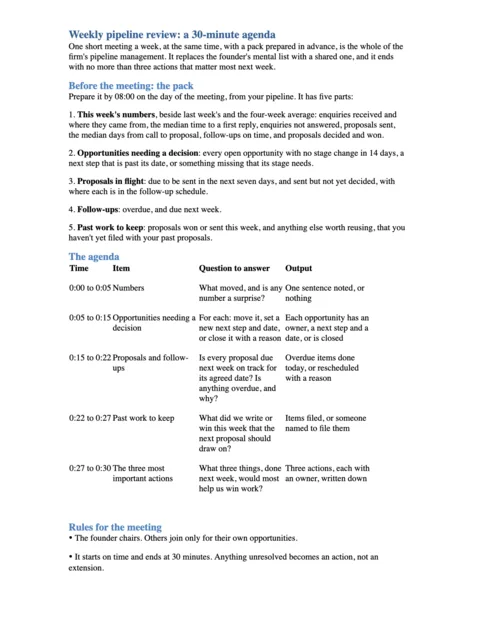
- Each week, go through every opportunity in your weekly review.
Using it
You may use, change and share it inside your own firm. Please don't sell it or publish it as your own.