Why it helps
One short meeting a week, at the same time, with a pack made in advance, can be the whole of your pipeline work. It swaps the founder's mental list for a shared one.
The agenda
| Time | Item | The question |
|---|---|---|
| 0:00 to 0:05 | Numbers | What moved, and is anything a surprise? |
| 0:05 to 0:15 | Opportunities needing a decision | For each one: move it, set a new next step and date, or close it |
| 0:15 to 0:22 | Proposals and follow-ups | Is each proposal on track? Is anything overdue, and why? |
| 0:22 to 0:27 | Past work to keep | What did we write or win this week that the next proposal should use? |
| 0:27 to 0:30 | The three most important actions | Which three things next week would most help us win work? |
How to use it
- Pick a time each week and keep it.
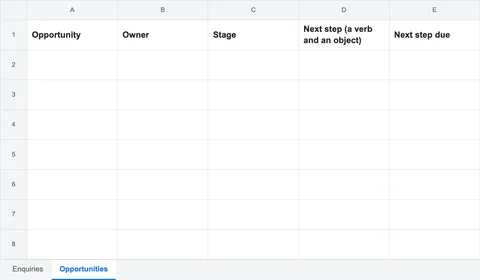
- Before the meeting, make the pack from your pipeline. The file lists its five parts, starting with this week's numbers.
- Start on time and stop at 30 minutes. Anything left over becomes an action.
- No opportunity leaves the meeting without an owner, a next step and a date, or a reason to close it.
- Once a quarter, compare the bid scores of tenders you won and lost. Allow 45 minutes that week.
The file has an example pack. It uses a made-up firm.
Where it comes from
A 2014 survey by the Sales Management Association and Vantage Point Performance was published in Harvard Business Review in 2015. It linked at least three hours a month spent on each seller's pipeline with 11% higher revenue growth. The survey did not give its size and was not peer-reviewed. Thirty minutes a week is less than that, so measure whether it is enough for you. Choosing three actions follows Mo Bunnell's weekly habit, from his book Give to Grow.
Using it
You may use, change and share it inside your own firm. Please don't sell it or publish it as your own.